
Why Entry-Level Healthcare Workers Play a Critical Role in Health Equity


Health equity doesn’t begin in boardrooms or policy meetings. It begins in the moments before a physician walks into the room, when a patient navigator answers a confused call, when a medical assistant helps someone understand their paperwork, or when a front desk coordinator makes a frightened patient feel seen.
Entry-level healthcare workers are often the first point of contact for patients from underserved populations, and that contact happens more frequently and for longer than most clinical interactions. Because they spend more time at ground level, they often notice the practical barriers to healthcare access that a brief clinical visit simply doesn’t surface. Things like transportation gaps, language confusion, or difficulty following discharge instructions tend to go unnoticed in short appointments but become visible through repeated, everyday contact.
That visibility matters. Research increasingly shows how non-medical staff shape patient outcomes in ways that go well beyond administrative support. Many of these frontline professionals begin their careers through specialized allied health training programs. For individuals interested in working alongside surgeons and operating room teams, attending a surgical tech school in Orange County can provide the practical clinical experience and technical skills needed to enter this essential healthcare field. When entry-level roles are filled thoughtfully and supported properly, they become one of the most direct means of reducing health disparities and improving care for the communities that need it most.
How Entry-Level Workers Move Equity Forward
Entry-level healthcare workers are not simply support staff filling gaps between clinical encounters. They are often the most consistent human presence a patient experiences within a health system, and that consistency has real consequences for healthcare access, trust, follow-through, and patient outcomes, particularly in underserved populations.
Because these workers interact with patients across a wider range of moments than most clinicians do, they are positioned to notice what formal assessments miss. A patient who seems disengaged may be dealing with housing instability. Someone who keeps rescheduling may lack reliable transportation. These are not clinical findings, but they directly affect whether care happens at all. Understanding how non-medical staff shape patient outcomes helps clarify why these roles deserve a central place in any serious conversation about health equity and reducing health disparities.
They Spot Barriers Before Care Falls Apart
Entry-level workers are often present at the exact moments when a patient’s practical circumstances become visible. That positioning gives them an early-warning function that the broader care team depends on, even when that dependence isn’t formally acknowledged.
What Frontline Staff Hear and See First
Entry-level workers encounter patients at the moments when practical realities surface most clearly. A scheduler notices that a patient keeps rescheduling because they have no reliable transportation. A patient navigator picks up on food insecurity during a routine intake call. A medical assistant realizes a patient doesn’t understand discharge instructions because English isn’t their primary language.
These observations happen organically, through repeated, unhurried contact that clinical staff rarely have time for. Housing instability, scheduling conflicts, and language barriers tend to emerge in conversation before they show up in any formal assessment, and frontline workers are positioned to catch them first.
Why SDoH Screening Cannot Rest on Clinicians Alone
Social determinants of health (SDoH) encompass the conditions in which people live, work, and access care, and they have a measurable effect on health outcomes, particularly for racial and ethnic minorities who already face compounded barriers to healthcare access. CDC health data recognizes that addressing SDoH is essential to reducing health disparities and improving population health overall.
Physicians and nurses carry full clinical loads, which limits how deeply they can explore non-clinical factors during a standard visit. Entry-level staff fill that gap structurally. When they surface a transportation barrier before an appointment is missed, or flag a language issue before a prescription goes misunderstood, early identification translates directly into fewer delays and fewer points where care falls through.
Trust Often Starts With Frontline Relationships
Health equity is not only a logistical challenge. It is also a relational one. For many patients from communities shaped by historical exclusion, the willingness to engage with a health system at all depends on whether they feel safe doing so. Entry-level workers, particularly those with community ties, often determine that answer before a clinician ever enters the room.
Community Health Workers Bridge System Gaps
For communities shaped by historical exclusion from healthcare, distrust of medical institutions is not irrational. It is a learned response, often rooted in structural racism and generations of inequitable treatment. Community health workers occupy a distinctive position within this reality.
Unlike clinic-based roles, community health workers often operate where patients actually live, moving between health systems and the neighborhoods those systems have historically underserved. That proximity gives them access to populations who might otherwise disengage entirely. They help schedule appointments, interpret information, and follow up after discharge, but their deeper function is relational.
For underserved populations navigating an unfamiliar or intimidating system, a familiar face representing the community rather than the institution can shift the dynamic meaningfully. Training pathways available at PracticeCNATest.com and similar resources increasingly prepare frontline candidates for roles where community collaboration is central, not incidental, reflecting a broader recognition that equitable care delivery starts with well-prepared entry-level workers.
Cultural Familiarity Improves Follow-Through
Shared language and lived experience are not soft advantages. They directly support culturally competent care by reducing the friction that causes patients to disengage after a first visit.
When a community health worker understands the cultural context behind a patient’s reluctance to discuss certain symptoms, or recognizes why a prescribed diet conflicts with deeply rooted food practices, that understanding shapes how information gets communicated and whether it lands. This kind of relational fluency supports continuity in concrete ways.
Patients are more likely to attend follow-up appointments, complete preventive screenings, and flag concerns early when they trust the person they’re speaking with. Those behaviors compound into measurably better patient outcomes across the communities these workers serve.
Better Support for These Roles Improves Outcomes
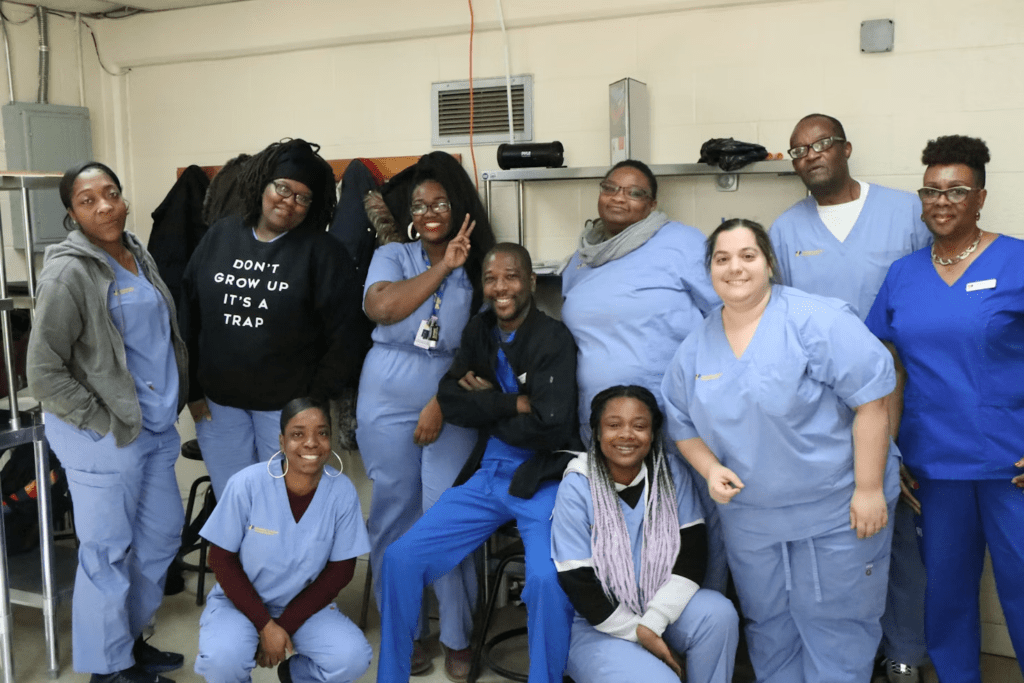
When entry-level workers receive adequate training, consistent supervision, and fair institutional support, their ability to identify risk and connect patients to appropriate resources improves substantially. That improvement flows directly into stronger continuity of care, fewer gaps in follow-through, and better patient outcomes across underserved populations.
This connection matters within value-based care frameworks, where reimbursement and performance metrics increasingly reflect how well systems address the full range of factors affecting patient health. Nonmedical barriers like housing, transportation, and food insecurity affect the same measurable outcomes that value-based care models are designed to improve. Entry-level roles that surface and respond to those barriers early are therefore directly relevant to how health systems perform and are evaluated.
Organizations including the Centers for Medicare & Medicaid Services (CMS) and the Robert Wood Johnson Foundation (RWJF) have emphasized workforce investment as a foundational piece of advancing health equity. Understanding education’s role in advancing health equity is part of that conversation. Workforce investment also matters for retention, since entry-level workers in equity-sensitive roles face high emotional demands, and without adequate support, burnout and turnover follow, disrupting the continuity these roles depend on to be effective.
Why These Jobs Also Matter for Workforce Equity
Entry-level healthcare roles do more than serve patients in the present. They can also shape the future composition of the healthcare workforce itself. Many workers who begin in patient-facing, entry-level positions go on to pursue nursing, allied health, and other clinical careers, carrying the experience and community insight they developed early.
Those pathways matter because racial and ethnic minorities remain underrepresented in clinical and leadership roles across healthcare. A more representative workforce, built partly through accessible entry points, strengthens communication, cultural familiarity, and trust with the communities most affected by health disparities. Organizations like the Robert Wood Johnson Foundation and the World Health Organization have both emphasized that a diverse, well-supported workforce is foundational to achieving health equity, not peripheral to it.
When entry-level roles function as genuine career pathways rather than dead ends, they contribute to reducing health disparities over time by changing who holds knowledge, relationships, and influence within the system.
Why Frontline Roles Belong in Equity Planning
Health equity efforts weaken when the workers closest to patients are treated as peripheral to the system. Entry-level roles are not background support. They are where healthcare access either opens or closes for the populations most affected by health disparities.
The decisions organizations make around recognition, training, and integration for these roles directly shape patient outcomes. When those decisions are made with equity in mind, the results are visible across continuity, follow-through, and community trust. Treating frontline workers as central to equity planning is not simply a structural preference. It is how equitable care actually happens.