
How Modern Detection Systems Are Revolutionizing Search and Rescue Operations

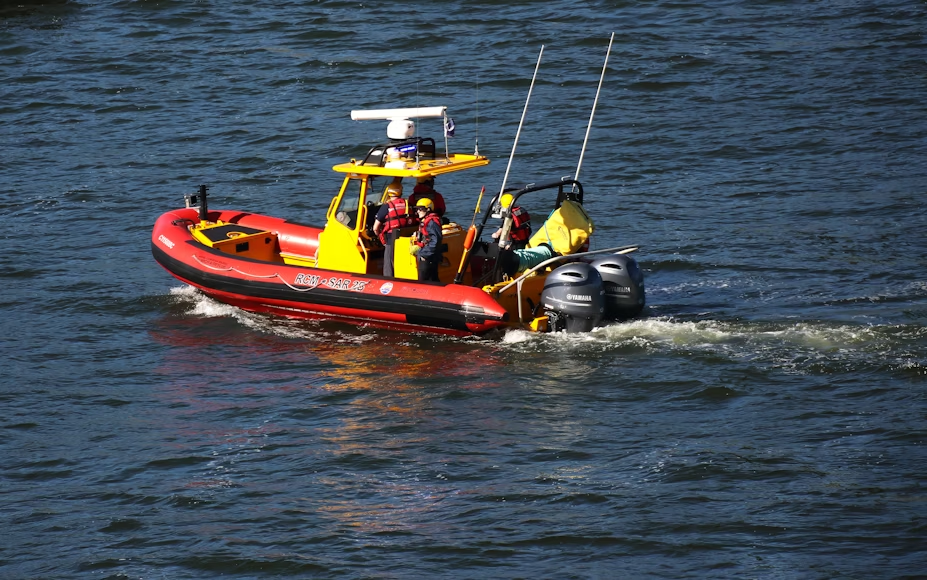
https://unsplash.com/photos/a-red-and-yellow-boat-traveling-down-a-river-kpZTsnICsbM
Searching underwater blind is no longer an option.
For search and rescue teams across the country, hours spent diving with ropes or grid searching on scuba are being flipped on their head by modern detection technology.
The advent of smart search and rescue sonar systems has made quick work of scenarios that once took teams days or were impossible to complete.
But how are modern detection systems changing search and rescue efforts? Here’s what you need to know.
What you’ll discover:
- Why Speed Is Everything In Water Rescue
- How Search and Rescue Sonar Works
- The Detection Systems Changing Everything
- Putting It All Together
Why Speed Is Everything In Water Rescue
Let’s start with something that will stop you dead in your tracks…
Drowning is incredibly common.
Globally, the World Health Organization estimates 295,000 people died from drowning accidents in 2020. That equates to about 29 victims per hour worldwide.
Drowning deaths even at a national level are still staggeringly high. The CDC reports there are over 4,000 unintentional drowning fatalities every year in the United States.
The single biggest factor in drowning survival is how long the victim spends underwater.
Studies have concluded that 91% of drowning victims who had successful outcomes were submerged for less than 6 minutes. After double that length of time, the chance of survival drastically reduces.
So when it comes to water rescue, seconds count.
Search and rescue teams have every incentive to locate victims as fast as possible. Thankfully when comparing Sonar vs. ROVs for finding victims, sonar wins hands down. Search and rescue sonar can be deployed in minutes and provide real-time visuals to dramatically reduce search times.
Searching underwater the old way required dive teams to suit-up and physically enter the water. Prepping equipment and suit-up alone can take upwards of 45 minutes.
How Search and Rescue Sonar Works
Sonar technology for search and rescue might sound complex. But the premise behind how sonar works is actually pretty simple.
Sonar emits sound waves into water. When they hit an object, those waves bounce back as echoes. Sonar systems take echoes and translate them into visuals that show teams what’s underneath the surface.
Voila. You now have a detailed picture of what’s beneath the surface… even if you can’t see it.
Sonar is game changing because most water rescue scenarios involve one or more of the following:
- You can’t see feet in front of you due to murky or turbid water
- The water is too deep and dangerous for divers
- The search area is too big to cover on diver safely
- The current is moving too fast for divers to keep up with
Side-note: Sonar still needs to be operated by people, so it’s not like a camera you can just toss in the water and forget about. However, the tech does provide visual references that would otherwise be impossible to see.
Without sonar, search and rescue teams are flying completely blind. With it, you can pinpoint the location of victims or suspects quickly and accurately.
The Detection Systems Changing Everything
But wait… not all sonar technology is created equal. When we say search and rescue sonar, we are actually referring to several different types of technology being used by teams today.
Knowing the strengths and weaknesses of each system can help you understand which will work best for your organization.
Side-Scan Sonar
Side-scan sonar is likely what most people think of when they hear search and rescue sonar. A side-scan device is literally sonar hardware towed behind a boat that scans the bottom of a body of water.
Pros:
- Fast coverage of large areas
- Creates detailed maps of underwater terrain
- Effectively operates in any water condition
- Limits unnecessary exposure for dive teams
Side-scan sonars are used by police search teams and recovery units all over the country. When used properly, side-scan allows agencies to limit dive team deployments only to areas where there is a “known” target.
AI-Powered Sonar
Alright, this is where we start getting into some really cool tech…
AI sonar doesn’t simply display what’s underwater. It analyzes millions of acoustic “snapshots” per second and uses algorithms to identify anomalies automatically.
Things you get to enjoy with AI Sonar include:
- Automatic target recognition to identify humans vs. junk
- Noise suppression technology that filters out “background noise”
- Instant alerts that don’t rely on human detection
- Consistent detection, regardless of water conditions
AI Sonar effectively augments your search and rescue teams. Think of it as your second set of eyes under the water.
ROVs (Remotely Operated Vehicles)
ROVs are basically underwater drones that can be controlled by an operator on the surface. First used by police to recover bodies from the depths of Lake Erie, ROVs have really taken off as an industry standard.
By mounting cameras and sonar on a waterproof drone, teams can peer into tight spaces and confirm targets without sending divers in.
The synergy between ROVs and sonar cannot be understated. There’s nothing more frustrating for dive teams than finishing a long search to be told there’s “something” on the sonar they need to check out.
Pairing an ROV with your sonar allows teams to confidently confirm targets before wasting time in the water.
Choosing The Right Technology For The Job
Here’s the thing with search and rescue sonar…
There is no perfect solution. Every recovery scenario is different and will require you to adapt on the fly.
But here are some things to think about when trying to decide which technology is right for you.
- What do the water conditions look like? Is it murky? Deep? Fast moving?
- How large of an area are you searching? A small pond? An entire lake?
- How soon do you need to get equipment in the water?
- How big of a budget do you have?
The most effective search and rescue teams use a blend of detection methods together. Starting with a handheld sonar unit and scanning from shore while a side-scan covers open water. Once they locate a target, they will deploy an ROV to make final confirmations before diving in.
Layering your technology gives you options. If you don’t find something with one device, you aren’t forced to immediately give up and move on. Teams can cycle through different methods until they get their answer.
Putting It All Together
Search and rescue sonar systems save lives.
That is not an exaggeration. Search sonar technology has advanced so quickly that there’s really no excuse for not using them.
To sum everything up:
- Seconds count when you’re searching for victims.
- Sonar allows you to search faster and more accurately than ever before
- AI powered sonar is changing the game
- Pairing ROVs with sonar allows you to make positive target identification before ever putting divers in harm’s way.
- Use multiple methods of detection to improve your chances of success
Searching blindly underwater should be a thing of the past. Search and Rescue Sonar doesn’t need to be the biggest investment your team makes but it should be considered.
You never know when that next call is going to come in and every second counts when someone’s life is on the line. Give your team the best chance for success and invest in sonar.