
Glass vs. Plastic Water Bottles: What the Research Actually Says About Your Health

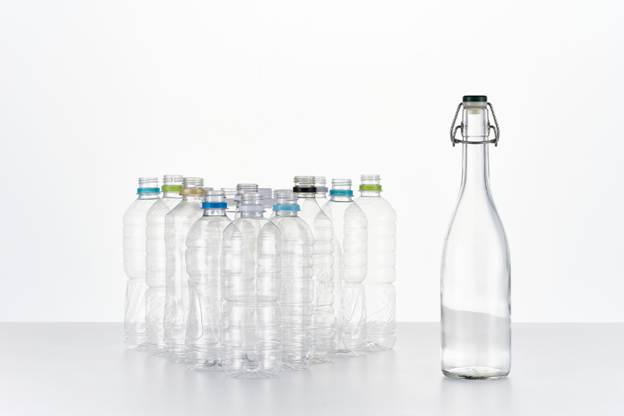
By Aflo Images on Canva
Most of us grab a plastic water bottle without thinking twice. It is cheap, it is everywhere, and it does the job. But a growing body of research is raising serious questions about what that plastic is putting into the water you drink, and the findings are hard to ignore.
This is not a scare piece. It is a look at what the science actually says about plastic water bottles, microplastics, and why the material your water comes in might matter more than you think.
240,000 Plastic Particles Per Liter
In January 2024, researchers at Columbia University published a study in the Proceedings of the National Academy of Sciences that changed how we think about plastic in bottled water. Using a newly refined imaging technique, stimulated Raman scattering microscopy, they detected and classified nanoplastics in bottled water for the first time (Qian et al., 2024).
The results were striking. On average, a single liter of bottled water contains approximately 240,000 detectable plastic fragments. About 90% of those were nanoplastics, particles so small they are measured in billionths of a meter (Qian et al., 2024). Previous studies had estimated far fewer particles because the technology to detect nanoplastics did not exist yet.
“Previously this was just a dark area, uncharted,” said study coauthor Beizhan Yan, an environmental chemist at Columbia’s Lamont-Doherty Earth Observatory. “This opens a window where we can look into a world that was not exposed to us before” (Qian et al., 2024, as cited in Columbia University, 2024, para. 6).
The most commonly detected plastic was polyamide, a type of nylon used in water filtration systems. PET (polyethylene terephthalate), the plastic used to make most water bottles, was also found in abundance (Qian et al., 2024). Particles enter the water through manufacturing, transportation, storage, and even the repeated opening and closing of bottle caps.
Why Nanoplastics Are the Bigger Concern
Microplastics, the fragments between 1 micrometer and 5 millimeters, have been in the news for years. But nanoplastics are a different story. They are small enough to pass through intestinal walls and lung tissue directly into the bloodstream, and from there they can travel to the heart, brain, and other organs (Columbia University, 2024). They can cross the placenta, meaning they can reach unborn children.
A 2025 review published in the Journal of Hazardous Materials examined over 140 studies on nano- and microplastics from single-use plastic water bottles. The review found that individuals consume between 39,000 and 52,000 microplastic particles annually, with bottled water drinkers ingesting roughly 90,000 more particles than those who drink tap water (An et al., 2025). Chronic exposure was linked to inflammation, hormonal disruption, reproductive issues, neurotoxicity, and potential carcinogenicity (An et al., 2025).
A February 2026 study from Ohio State University confirmed the pattern. Researchers found that bottled water contained approximately three times as many nanoplastic particles as treated drinking water from municipal sources (Hart et al., 2026).
The BPA and Phthalate Factor
Microplastics are not the only concern with plastic bottles. BPA (bisphenol A) and phthalates are chemical compounds commonly found in plastics that can leach into water, especially under heat or prolonged storage (Rouse da Silva Costa et al., 2021).
Dr. Mark Hyman, a functional medicine physician, has described BPA as a compound that “acts as a fake estrogen” in the body (Hyman, 2016, para. 6). Both BPA and phthalates are classified as endocrine disruptors, meaning they interfere with the body’s hormone signaling. Studies have linked chronic exposure to fertility problems, metabolic disruption, and increased cardiovascular risk (Rouse da Silva Costa et al., 2021).
The concern intensifies with heat exposure. Leaving a plastic bottle in a hot car or in direct sunlight accelerates the rate at which these chemicals migrate into the water. This is a practical issue that affects anyone who keeps a case of water in their trunk, on a construction site, or in a warm storage space.
Why Glass Is Different
Glass is inert. It does not react with its contents, does not leach chemicals, and does not degrade over time. A glass bottle of water stored for a year will have the same chemical composition as the day it was bottled. That is not something you can say about plastic.
From a health perspective, the case for glass is straightforward: it eliminates the microplastic and chemical leaching concerns entirely. From an environmental perspective, glass is infinitely recyclable without any loss of quality, unlike plastic, which degrades with each recycling cycle.
The tradeoff is cost and convenience. Glass is heavier and more fragile. But for regular home use or daily hydration, it is the cleaner option. Some bottled water brands have committed to glass-only packaging for this reason. Chiarella, for example, an Italian mineral water sourced from a protected Alpine spring, bottles exclusively in glass, avoiding the microplastic and chemical exposure issues associated with plastic entirely.
What You Can Actually Do
The research on microplastics is still evolving. We do not yet have definitive long-term health outcome data in humans, and the field is moving fast. But the precautionary principle applies: if you can reduce your exposure without significant cost or effort, it makes sense to do so.
Here are a few evidence-based steps:
Choose glass or stainless steel when possible. For home use, a glass carafe or stainless steel bottle eliminates plastic contact entirely.
Never heat plastic. Do not microwave food in plastic containers, leave water bottles in hot cars, or wash plastic bottles in dishwashers with high heat settings.
Filter your tap water. A quality home filter removes many contaminants while avoiding the plastic packaging issue altogether. Martin Riese, a certified water sommelier, has recommended that people invest in a home filter and a reusable bottle rather than buying purified water in plastic (Pfeiffer, 2023).
Read the label. If you are buying bottled water, look for glass packaging, a named natural source, and natural mineral content. Purified water in plastic is essentially filtered tap water with added microplastic exposure.
Stay informed. This field is changing rapidly. The WHO has called for more research and better regulation of microplastics in drinking water (World Health Organization, 2019).
The Bottom Line
The plastic water bottle is one of the most ubiquitous consumer products in the world. But the research increasingly suggests that it comes with tradeoffs most people are not aware of. Hundreds of thousands of plastic particles per liter. Chemical compounds that mimic hormones. And a growing scientific consensus that exposure matters, even if we do not yet fully understand how much.
You do not have to overhaul your life overnight. But switching to glass where practical, filtering your tap water, and being mindful about heat exposure are small changes backed by real science. Your water should hydrate you, not quietly introduce contaminants you never asked for.