
Expanding Access to Quality Eye Care in Underserved Communities


Even when someone knows their vision is declining, getting to an eye doctor is rarely straightforward. For millions of people living in underserved communities across the United States, eye care access breaks down long before an appointment is ever made.
The most common barriers are structural: limited insurance coverage that excludes vision services, a shortage of optometrists in rural and low-income urban areas, and transportation gaps that make even nearby clinics effectively unreachable. Health literacy plays a role too, as many patients are unaware of what symptoms warrant professional evaluation or what programs exist to help cover costs. These are not failures of individual motivation but rather the predictable result of systems that were never designed with equitable geographic access in mind.
Some provider networks, such as Mann Eye Institute, have expanded their reach to address gaps in local availability, though supply alone cannot resolve the deeper structural barriers underserved communities face within the healthcare system. What makes this particularly consequential is that delayed eye care rarely stays contained. Conditions like glaucoma and diabetic retinopathy progress silently, and by the time a patient reaches care, preventable vision loss may already be underway.
Where Eye Care Access Breaks Down Most
Understanding where the system fails requires looking at the full picture. Cost is often the first obstacle, but it is rarely the only one. Insurance coverage gaps, provider scarcity, transportation burdens, and low health literacy tend to compound one another, meaning a patient who faces one barrier is likely facing several at once.
These are structural problems, not personal ones. When a community lacks nearby optometrists, when vision care is excluded from standard insurance plans, and when health information is not available in a patient’s primary language, delayed care becomes the predictable outcome rather than the exception. That delay, in turn, connects directly to preventable vision loss and poorer long-term outcomes across the board.
Why Underserved Groups Face Higher Vision Risks
The consequences of limited eye care access are not evenly distributed. Underserved populations carry a disproportionate burden of vision-threatening conditions, and the structural barriers described above mean those conditions are far more likely to be caught late. According to WHO vision data, a significant share of visual impairment worldwide is either preventable or treatable, yet it persists precisely because care does not reach people in time.
The Conditions Most Often Missed or Delayed
Some of the most common vision-threatening conditions offer little warning before serious damage occurs. Glaucoma, for instance, can silently destroy the optic nerve over years before a patient notices any change in their sight.
Diabetic retinopathy follows a similar pattern, progressing through early stages without obvious symptoms while the retina sustains irreversible damage. Cataracts develop more gradually and are generally detectable, but without timely access to surgical care, they remain a leading cause of visual impairment worldwide.
The shared thread across these conditions is time. When regular screening is absent, the window for effective, lower-cost intervention closes well before a diagnosis is ever made.
How Disparities Turn Treatable Problems Severe
Racial disparities and socioeconomic status shape not just who gets care, but how late they receive it. Black Americans face significantly higher rates of glaucoma-related blindness, while Hispanic and Latino communities carry a disproportionate burden of diabetic retinopathy linked to elevated rates of type 2 diabetes and inconsistent screening access.
These patterns do not reflect differences in biology alone. They reflect differences in what the healthcare system makes available and to whom. When a condition is caught late, treatment becomes more intensive, less effective, and more expensive. Vision loss that could have been slowed or prevented through early intervention instead accelerates, affecting a person’s ability to work, move independently, and maintain quality of life.
The connection between structural barriers and long-term outcomes is not indirect. Delayed diagnosis, in these populations, reliably produces worse results.
The Structural Barriers That Keep Care Out of Reach
The barriers covered in the opening section take on different forms depending on where a patient lives and what resources they can access. In practice, these obstacles rarely appear in isolation. A patient navigating coverage gaps is often also managing transportation challenges and limited health literacy at the same time, making each individual barrier harder to overcome than it would be on its own.
Coverage Gaps and Out-of-Pocket Costs
Insurance coverage is one of the most immediate obstacles patients face. Many standard health insurance plans treat vision care as supplemental, excluding routine eye exams, prescription lenses, and follow-up visits from base coverage.
Even when vision benefits exist, out-of-pocket costs for copays, eyeglasses, and specialty referrals can be prohibitive for low-income households. Choosing the right eyeglasses for everyday needs involves decisions that assume a patient already has access to a completed exam and a valid prescription, a sequence that financial barriers can interrupt at any stage. For underserved communities, cost is rarely a single hurdle. It is a series of them stacked together.
Distance, Transportation, and Provider Shortages
Geographic access compounds the financial picture. Optometrists are unevenly distributed across the country, with rural areas and low-income urban neighborhoods consistently underserved relative to patient need.
When the nearest provider is an hour away and a patient has no reliable transportation, preventive visits become logistically difficult regardless of cost. These barriers do not always appear in clinical data, but they reliably reduce appointment attendance, continuity of care, and follow-up compliance. The shortage of optometrists in underserved areas also creates longer wait times, which delays diagnosis for conditions that progress without symptoms.
Health Literacy and Culturally Competent Care
Health literacy affects whether patients recognize symptoms worth reporting and whether they trust the systems available to them. Many individuals in underserved communities have had limited exposure to preventive care frameworks, making it harder to navigate referrals, understand diagnoses, or ask informed questions.
Cultural competence among providers shapes this experience directly. When language barriers go unaddressed or care environments feel unfamiliar, screening uptake and adherence both decline. Health disparities widen not only because services are absent, but because the ones that exist are not always designed for the populations they are meant to serve.
What Is Helping Expand Quality Eye Care Now
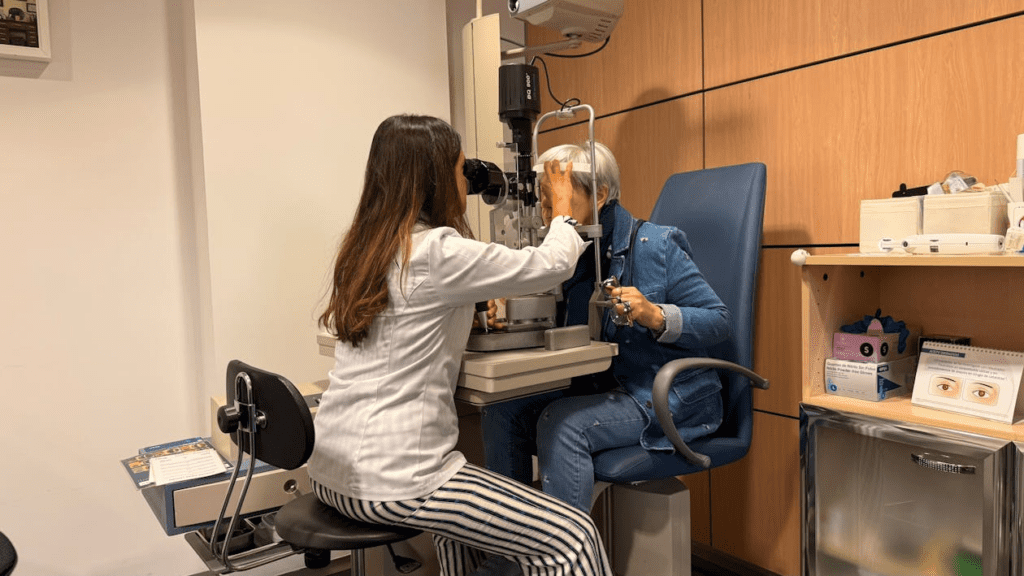
No single model solves the access problem everywhere. The barriers are too varied and too layered for any one intervention to address them all. However, several approaches have shown meaningful results in specific contexts, and understanding where each works best helps health systems and policymakers invest more effectively.
Teleoptometry and Remote Screening Models
Teleoptometry has emerged as one of the more practical tools for extending eye care reach where in-person optometrists are scarce. Using remote diagnostic equipment and digital image transmission, trained technicians can capture retinal images and other clinical data that a licensed optometrist reviews off-site, often within the same day.
This model is particularly effective for initial screening and triage. It does not replace a full comprehensive exam, but it can identify patients who need urgent referral and distinguish them from those whose conditions can be monitored over time. For underserved communities where specialist access is limited, that distinction alone can be meaningful.
The World Health Organization has recognized task-shifting and technology-enabled outreach as necessary strategies for closing global eye care gaps, and teleoptometry fits within that framework by reducing the physical distance between patients and clinical expertise.
Mobile Clinics and School-Based Vision Programs
Mobile eye clinics bring equipment and optometrists directly into communities, bypassing the transportation barriers that prevent many patients from reaching fixed-location providers. They are especially effective in rural areas where the nearest practice may be more than an hour away.
School-based vision programs address a different but equally significant gap: pediatric eye care. Children with undetected refractive errors often struggle academically before anyone connects the difficulty to vision. Screening programs embedded in schools reach children at a stage when correction is most effective, without relying on a parent’s ability to schedule and attend a separate appointment.
Both models share a common limitation, however. They improve screening access more reliably than they improve treatment access. A child identified with amblyopia still needs follow-up care, and a rural patient flagged for glaucoma risk still needs a path to ongoing management.
Community Partnerships That Improve Follow-Through
Screening is only as useful as what happens after it. Community outreach programs that include health workers trained in navigation and reminders have shown stronger referral completion rates than screening-only interventions.
Community health workers familiar with local languages, cultural norms, and social circumstances can bridge the gap between a positive screening result and an actual follow-up appointment. They help patients understand what a diagnosis means, identify low-cost treatment options, and work through logistical barriers that a clinical setting rarely has the capacity to address.
These partnerships between health systems, community organizations, and local providers extend the reach of optometrists without requiring new facilities, making them a scalable component of any sustained effort to reduce eye care disparities.
What Healthcare Leaders Can Prioritize Next
Translating the problem into action requires focusing on the areas where investment will have the most durable effect. The solutions discussed above, from teleoptometry to community health workers, depend on underlying policy and workforce conditions that leaders at the system and institutional level are best positioned to shape.
Build the Workforce Where Need Is Highest
Screening programs and mobile clinics can only go so far without the trained professionals to staff them. Expanding optometry training pipelines and creating financial incentives for service in high-need areas, such as loan forgiveness programs or salaried placement models, would help redirect workforce distribution toward communities that consistently face shortages.
The World Council of Optometry and the Centers for Disease Control and Prevention have both pointed to workforce equity as a foundational component of blindness prevention strategy. Without deliberate placement policies, graduates will continue to concentrate in areas that are already well served. Health systems and policymakers can also support expanded roles for optometric technicians and community health workers with vision training, increasing the reach of each licensed provider in resource-limited settings.
Fund Care Beyond the Screening Stage
Identifying a problem without funding its resolution does little to reduce long-term harm. Policy mechanisms that extend insurance coverage to include follow-up exams, specialist referrals, corrective lenses, and surgical treatment are essential for turning screening data into actual health outcomes.
The World Health Organization has consistently framed eye care financing as inseparable from equitable health system design. When funding stops at the screening stage, the populations most likely to need continued care are the same ones least equipped to cover remaining costs out of pocket. Prevention-first planning means allocating resources across the full care continuum, not just the entry point.
Closing the Gap in Vision Care Access
Preventable vision loss in underserved communities is rarely the result of untreatable disease. Far more often, it reflects the point at which eye care access failed, whether at the level of coverage, geography, language, or trust.
What the evidence consistently shows is that no single solution closes that gap. Workforce capacity, affordability, community outreach, and culturally competent care each address a different layer of the problem, and effective progress requires all of them working together.
Visual impairment that could have been slowed or prevented remains one of the clearest indicators of a system that has not yet reached everyone it was built to serve. Addressing that reality starts with treating access as a clinical priority, not an afterthought.