Integrating Music into Senior Care for Improved Quality of Life

https://unsplash.com/photos/elderly-man-with-headphones-uses-a-tablet-on-couch-XBZudTgyh44
Aspire for Greatness with a Playlist
Aspire for Greatness in Healthcare
Across the nation, millions of seniors are struggling daily with isolation, cognitive decline and emotional hardships. Regrettably, traditional care methods are not always effective in improving this deeper level of care.
The good news?
Music is an extremely valuable non-medication method to help better the livelihood of elderly residents.
In this article:
- Why Music Makes a Difference for Senior Care
- How Music Works for Seniors
- Tips for Building a Music Program
- Types of Music Interventions
- Broadening the Benefits
- Implementation: How to Start
- Wrapping Up
Why Music Makes a Difference for Senior Care
Music is a universal language that reaches all ages, backgrounds and cognitive levels.
The key point…
Even when memory becomes difficult and communication fails, our connection to music still endures. It is for this reason that music is one of the most impactful resources for enhancing senior patient care with music.
Numerous musical nonprofit organizations are working to connect professional musicians and music therapists with senior care communities. This type of programming improves the livelihood of seniors by creating an emotional connection and reducing isolation.
On top of this, according to a University of Michigan poll, 85% of older adults listen to music at least a few times a week. This reflects just how much of an impact music has in their lives.
Music, however, is not only used for enjoyment. It’s for restoration.
Music’s Impact on Senior Care
Evidence shows that music therapy can have an extreme impact on seniors with dementia and other cognitive decline. This is because music therapy uses a non-verbal form of communication that boosts several areas of the brain. Namely, music:
- Stimulates memory and recall
- Targets emotional processing
- Promotes motor coordination
- Aids language and communication
As you can see, music provides a lot of multi-sensory stimulation. Research has found that music therapy greatly reduces depression and anxiety symptoms and improves quality of life indicators in senior patients. With over 55 million people worldwide living with dementia, non-pharmaceutical approaches like music have never been more important.
Music, it turns out, is the answer.
The beauty of music is that it works where other things do not. Residents who are unable to communicate vocally are still able to bond through familiar songs. Seniors that have become reclusive light up when they recognize their favorite music.
Amazing, right?
Implementing a Music Program
Wondering how a senior patient care home can actually apply this into their homes?
Begin with an assessment. It is critical to understand every resident’s musical preferences and background. For example, what music were they exposed to growing up? Are there any special songs that mean something significant to them?
The following are some of the methods that work best:
- Creating customized playlists based on personal history
- Planning regular group music sessions
- Collaborating with local musicians for live performances
- Instructing staff on basic music intervention strategies
- Tracking progress and adjusting as needed
Consistency is key. A one-time concert is nice, but the results come with regular music programming.
Take into account the timing. Strategic times during the day can call for different types of music. Soothing music is perfect during morning care. Energetic music can help boost afternoon activities. Calming lullabies may even help transition to sleep.
It does not need to be complicated.
Playing a resident’s favorite music during meal times can help increase appetite and social interaction. Simple changes can lead to significant improvements in residents’ overall well-being.
Types of Music Interventions
Music programs are not all created equal. Following are some of the programs that help make the biggest impact on improving senior patient care with music:
Active Music Therapy
Active music therapy is when the residents are actively participating by singing, playing an instrument or moving to the beat. It is much more engaging and usually has the largest cognitive results.
Clapping to a rhythm, humming along a familiar chorus or tapping on simple percussion instruments all count. No one is seeking perfection, just participation.
Receptive Music Listening
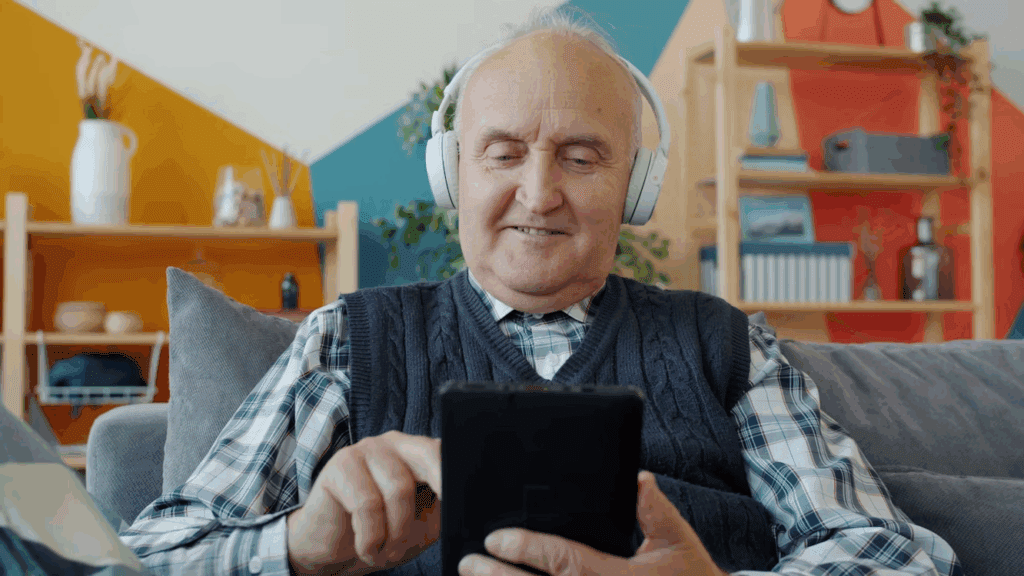
In other situations, passive music listening is all that is required. Streaming customized playlists can help with agitation, lower blood pressure and overall, create a calming atmosphere.
Active receptive works great with seniors who are in the later stages of dementia and struggle to be active participants.
Live Music Performances
There is a special magic to live music that is hard to be replicated by a recording. The energy, the connection, the shared experiences are truly special…
Numerous facilities have found success by partnering with local artists, high school musicians and even professional performers to bring live entertainment to residents.
Personalized Music Programs
One of the most powerful interventions is building an individual playlist that is based on each resident’s musical history and preferences.
When a resident hears a song that reminds them of their wedding or a melody that speaks of their children, something truly special occurs. Memories are awakened. Eyes brighten. Doors of communication are opened.
Broadening the Benefits
Beyond cognitive improvements, music programs also offer a wide range of secondary benefits that further help improve the livelihood of seniors:
- Social Connection: Group music sessions promote socialization between residents who would otherwise be isolated.
- Reduced Agitation: Familiar music calms and reduces behavioral symptoms.
- Staff Morale: Music creates a more pleasant environment for everyone, including the caregivers.
- Family Engagement: Musical activities provide families with a more meaningful way to connect with seniors during visits.
The benefits, as you can see, reach throughout the entire care community.
Getting Started Today
Creating a music program does not need to be expensive or require any special equipment.
Here are a few basic needs:
- Speaker system
- Streaming service/CDs
- Staff willing to integrate music into daily care routines.
This is the foundation. From here, communities can expand into more structured programming, music therapy and partnerships with professional musicians.
The most important step is to simply begin. Even small musical moments can make a significant difference in the lives of seniors.
Bottom Line
Music is more than just an entertainment for senior adults. It is a valuable therapeutic tool that helps improve cognitive ability, emotional health and overall quality of life.
The research is solid. The implementation is easy. The impact can be measured.
Senior care facilities should all be investigating how to better integrate music into daily care programming. The residents deserve this. In fact, it is one of the most cost-effective methods of intervention that there is.
Start small. Be consistent. Witness the transformation occur.
This is the true way to improve senior patient care with music.